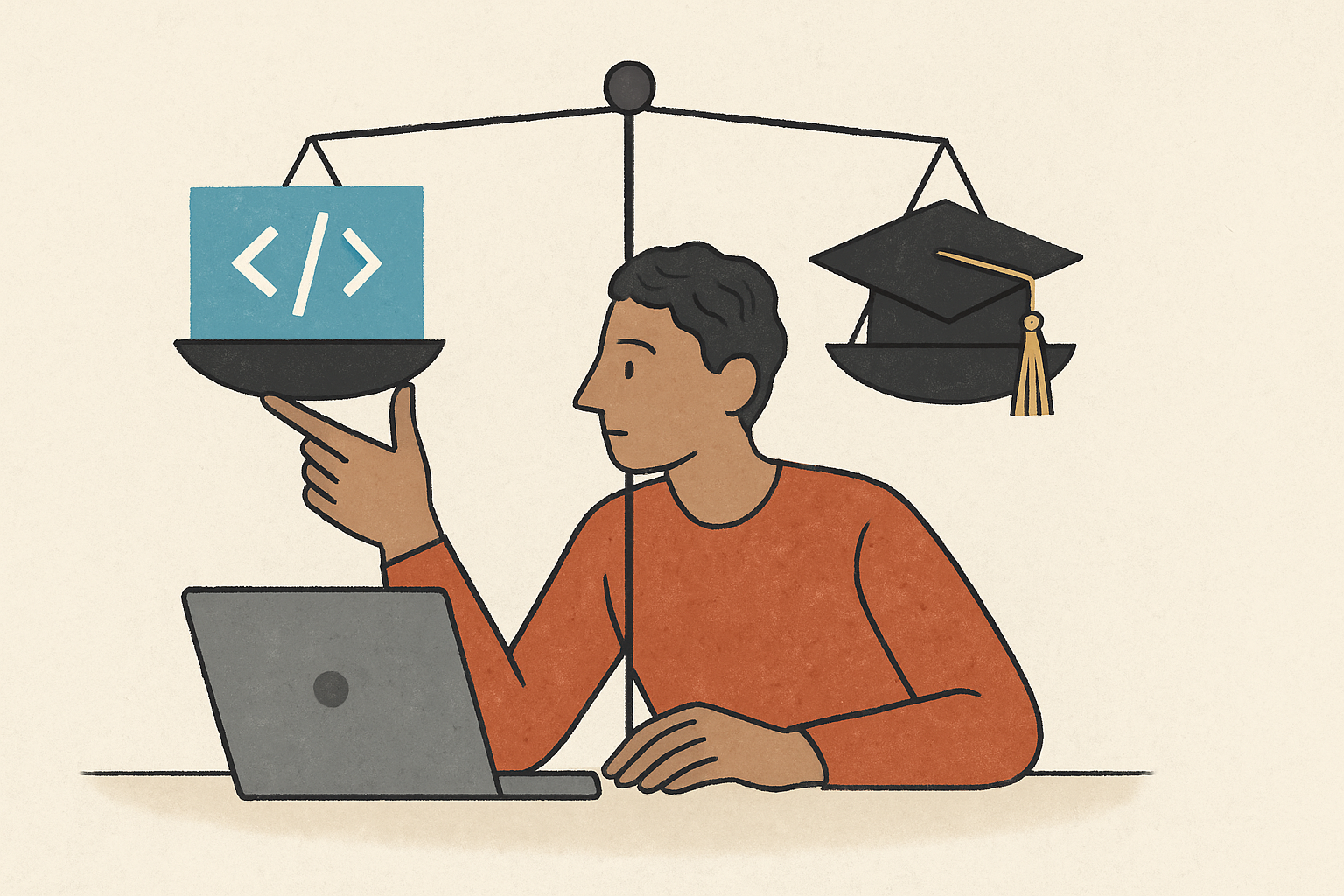
Staring at the price tag of a computer science degree, it’s hard not to wonder: is there a faster, less expensive way to actually land a job in tech? It’s no secret that coding bootcamps and other intensive programs are everywhere now—promising job-ready skills in months, not years. But are these programs really worth the investment in 2025, especially compared to the traditional college route?
How Coding Bootcamps Stack Up Against College Degrees
The appeal of coding bootcamps is obvious: focused curriculum, hands-on projects, and a clear path to employment. Meanwhile, college degrees offer broader education and a classic campus experience—but often at a much higher cost and time commitment.
Here’s what sets them apart:
- Duration: Bootcamps typically last 3–6 months; bachelor’s degrees take 4 years.
- Cost: Bootcamps range from $7,000 to $20,000; college tuition can exceed $100,000.
- Curriculum: Bootcamps focus on practical software development skills; colleges cover theory, electives, and general education.
- Job Placement: Many bootcamps advertise high placement rates, but definitions (and outcomes) vary.
The Best Coding Bootcamps Worth Considering in 2025
The landscape is crowded with options—some reputable, some not. The following bootcamps consistently appear at the top of independent rankings thanks to transparent outcomes, strong employer connections, and alumni reviews.
1. Springboard
- Cost: $9,900–$16,200 (varies by program)
- Length: 6–9 months (self-paced)
- Job Placement Rate: ~91% within six months (for eligible graduates)
Springboard stands out for its mentor-driven model and job guarantee on several tracks—including software engineering and data science. Students work through real-world projects while receiving weekly one-on-one mentorship from industry professionals. Alumni praise the career coaching and project-based learning style. The self-paced structure works well for those balancing work and study.
2. Flatiron School
- Cost: $17,900 (software engineering)
- Length: 15 weeks full-time or up to 60 weeks part-time
- Job Placement Rate: ~86% within six months (according to audited reports)
A well-established player in the bootcamp space, Flatiron offers both in-person and remote options across major U.S. cities. Their curriculum blends programming fundamentals with agile workflows and group projects—a plus for those seeking collaboration. Flatiron publishes annual outcomes reports for transparency. The career services team actively supports students through networking events and interview prep.
3. General Assembly
- Cost: $16,450 (full-time immersive)
- Length: 12 weeks full-time or flexible part-time options
- Job Placement Rate: ~84% within six months (for full-time U.S. programs)
A global brand with locations worldwide, General Assembly offers immersive courses in software engineering as well as short professional courses in UX/UI design and data analytics. Their strong employer partnerships lead to frequent hiring events and workshops. While outcomes vary by campus and course format, alumni often cite GA’s community and robust alumni network as major assets when job-hunting.
4. Hack Reactor by Galvanize
- Cost: $19,480
- Length: 12 weeks (full-time), or part-time options available
- Job Placement Rate: ~79% within six months (as reported for recent cohorts)
If you’re looking for an intense technical challenge, Hack Reactor is known for its rigorous admissions process—and its advanced JavaScript curriculum attracts students aiming for Silicon Valley roles. The alumni network is particularly strong among startups and high-growth companies. They also offer scholarships aimed at increasing diversity in tech.
Coding Bootcamp Job Guarantees: What Do They Really Mean?
A growing number of bootcamps offer “job guarantees” or income-share agreements promising that you won’t pay unless you get hired above a certain salary threshold. However, it’s important to read the fine print—eligibility often depends on your background or requires completing every milestone on time.
- You may be required to apply for a minimum number of jobs per week.
- Certain locations or citizenship status may be excluded from guarantees.
- The definition of “job placement” often includes contract work or internships—not just full-time roles.
Coding Bootcamp Outcomes vs College Degrees: Real-World Data
Salaries After Graduation
The most reputable bootcamps publish annual outcome reports audited by third parties—for example, Council on Integrity in Results Reporting (CIRR). Median starting salaries for coding bootcamp grads typically range from $65k–$80k depending on city and prior experience.
Bachelor’s degree holders in computer science report median starting salaries between $70k–$90k according to NACE data—but this varies widely based on school prestige and location.
The Importance of Your Background
Coding bootcamp marketing sometimes glosses over this reality: prior education matters more than you might think. Graduates with previous degrees—especially STEM—tend to see higher placement rates and salaries after a bootcamp than those switching careers without any college background.
The Hidden Costs—and Benefits—of Bootcamps vs College
- Lack of Accreditation: Most bootcamps don’t grant degrees or have regional accreditation—this can matter if you plan to pursue further formal education later on.
- No Federal Financial Aid: You’ll likely need private loans or upfront payment; scholarships exist but are competitive.
- Lighter Alumni Networks: Colleges often have decades-old alumni pipelines into top companies; some bootcamps are catching up but aren’t there yet.
- No General Education Requirements: Bootcamps cut straight to skills—you won’t be writing essays or taking unrelated courses.
- Pace & Pressure: Bootcamps move quickly—you’ll be expected to learn rapidly, keep pace with assignments, and work collaboratively under tight deadlines.
If You’re Comparing Coding Bootcamps: Questions That Matter Most
- Status of Job Guarantee: Is it available? What are the eligibility requirements?
- Cohort Format vs Self-Paced Learning: Cohort models provide structure but require strict scheduling; self-paced is more flexible but demands discipline.
- Mental Health & Support Services: Binge-learning can be stressful—does the program offer support?
- Diversity & Inclusion Efforts: If this matters to you personally or professionally, check their scholarship programs or demographic stats.
Coding Bootcamp Alternatives: Online Certifications & Professional Courses
If you’re not ready to commit financially—or want a gentler introduction—consider online certifications or professional courses as stepping stones into tech careers:
- Google IT Support Professional Certificate (Coursera): Low-cost entry into help desk roles
- edX MicroBachelors® Programs (edX): University-backed credentials with credit pathways
- Zero To Mastery Web Developer Course (Udemy): Skill-focused learning at your own pace
- Grow With Google Career Certificates (Google Career Certificates): Recognized by employers nationwide
The Role of Trade Schools & Hybrid Programs in Tech Careers
Coding isn’t the only path into tech-adjacent fields with strong earning potential—trade schools offer hands-on training for roles like network administration or cybersecurity technician without requiring four-year degrees.
Hybrid models are also emerging: some community colleges now partner with major tech employers on accelerated certificates that blend classroom instruction with paid apprenticeships.
The Bottom Line: Is a Coding Bootcamp Worth It in 2025?
If your goal is landing a developer role quickly—and you thrive under pressure—a reputable coding bootcamp can absolutely deliver results comparable to entry-level college grads at a fraction of the cost and time commitment. However, success depends heavily on your motivation level, ability to self-direct learning outside class hours, existing professional experience, and willingness to immerse yourself fully during the program window.
If you crave broader academic foundations—or want access to graduate school later—a traditional degree still carries unique advantages. For many career switchers though, a carefully chosen coding bootcamp remains one of the most effective shortcuts into tech jobs that pay well in today’s market.
Your Next Steps: How To Choose Your Path Wisely
- If possible, speak directly with alumni (not just admissions reps) about their real job search experiences post-bootcamp.
- Dive into free online modules (Codecademy, freeCodeCamp.org) before committing financially.
- Create a shortlist based on your preferred learning style, whether cohort-based immersion or self-paced flexibility.
- If money is tight, sift through scholarships—or consider online professional certificates as an affordable first step before investing in intensive training.
- Earmark time for portfolio building. No matter which route you choose—a portfolio of real projects will matter more than transcripts when applying for jobs.
The proliferation of alternatives—from online certifications to trade schools—means your options have never been broader or more customizable. Your best bet is matching your ambitions (and risk tolerance) with a program whose outcomes speak louder than their marketing copy.